
 Carrie Chu
What Is SEO? (The Plain-English Answer)
SEO — Search Engine Optimisation — is the practice of improving your website so that it appears higher in Google’s unpaid (organic) search results. When someone in Singapore searches “best accounting software” or “dentist near Orchard Road,” Google ranks hundreds of thousands of pages in a fraction of a second. SEO is the work that makes your page the one Google chooses to show.
The higher your ranking, the more clicks you receive. The first result on Google gets approximately 27% of all clicks; the second gets around 15%. By page 2, click-through rates drop below 1%. For most businesses, being on page 1 of Google for your most important keywords is among the most valuable marketing assets you can build.
How Google Decides Who Ranks
Crawling and Indexing
Google uses automated programs called “crawlers” or “spiders” to discover and read pages across the internet. When a crawler visits your page, it reads the content and follows links to other pages. The information it collects is stored in Google’s index — a massive database of all the content Google knows about. If your page is not indexed, it cannot rank.
Google’s Ranking Factors
Google uses over 200 signals to decide where to rank a page for a given search query. The most important fall into three categories:
- Relevance — does your page directly and thoroughly answer the search query?
- Authority — do other reputable websites link to your page and domain?
- User experience — does your page load fast, work on mobile, and deliver a good reading experience?
E-E-A-T: Google’s Quality Framework
Since 2022, Google has placed increasing weight on E-E-A-T: Experience, Expertise, Authoritativeness, and Trustworthiness. This means content written by or attributed to genuine experts, with verifiable credentials, published on authoritative domains, ranks better than anonymous, generic content. For Singapore businesses in regulated industries (healthcare, finance, legal), demonstrating E-E-A-T is especially important.
The Three Pillars of SEO
1. On-Page SEO
On-page SEO refers to everything you do on your own website to improve rankings. This includes:
- Keyword research — identifying which search terms your audience uses and building content around them
- Title tags and meta descriptions — the text that appears in search results; must include target keywords
- Header structure — using H1, H2, H3 tags logically to signal content hierarchy to Google
- Content quality and depth — comprehensive, accurate, well-written content that fully answers the search query
- Internal linking — connecting related pages on your site to distribute authority and help crawlers navigate
- Image optimisation — compressing images and adding descriptive alt text
2. Technical SEO
Technical SEO ensures Google can crawl, index, and understand your website properly. Key technical elements include:
- Page speed and Core Web Vitals — Google’s official page experience metrics (LCP, CLS, INP)
- Mobile usability — your site must work flawlessly on smartphones; Google uses mobile-first indexing
- HTTPS security — all pages must be served over a secure connection
- XML sitemap — a file that tells Google which pages to crawl and how often they change
- Structured data/schema markup — code that helps Google understand your content (FAQs, reviews, products)
- Canonical tags — preventing duplicate content issues across your site
3. Off-Page SEO (Link Building)
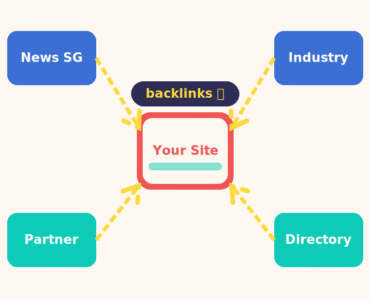
Off-page SEO is the practice of earning links from other websites to yours. Each link is effectively a vote of confidence — Google counts links from authoritative, relevant sites as evidence that your content is trustworthy. Link building is notoriously time-consuming, which is why it is one of the primary areas where working with a professional SEO agency pays off.
Blog SEO — Getting Your Articles to Rank
How to Optimise a Blog Post for Google
A well-optimised blog post targets a specific keyword with sufficient search volume, is longer and more thorough than competing articles, includes the keyword naturally in the title, URL, first paragraph, and at least one H2, uses internal links to related pages on your site, and earns backlinks over time through promotion and outreach.
The Role of Freshness
Google favours freshness for certain types of queries — news, events, rapidly changing topics. For evergreen topics (guides, how-tos, comparisons), freshness matters less, but updating your articles annually with current data, new statistics, and improved depth helps maintain and improve rankings over time.
How to Create an SEO Strategy (Step by Step)
Step 1: Conduct a Technical Audit
Before creating any new content, make sure your website’s technical foundations are solid. Use Google Search Console to identify crawl errors, indexing issues, and mobile usability problems. Fix these first — there is no point driving traffic to a site Google cannot properly read.
Step 2: Do Keyword Research
Use tools like Google Keyword Planner, Semrush, Ahrefs, or Ubersuggest to identify keywords your target audience searches for. Prioritise keywords by search volume, keyword difficulty, and search intent (informational, commercial, transactional). Build your content plan around the highest-value, most winnable opportunities.
Step 3: Audit and Improve Existing Content
Most websites have underperforming pages that rank on page 2 or 3. A targeted optimisation effort on these pages — improving depth, adding internal links, refreshing data — can produce quick ranking wins without creating new content.
Step 4: Produce New SEO Content Consistently
Content production is the engine of SEO. Commit to a realistic publishing cadence — even one thoroughly researched, 2,000+ word article per month is better than 10 thin posts. Each article should target one primary keyword and support your topic cluster architecture.
Step 5: Build Backlinks
Outreach to industry publications, digital PR, creating linkable assets (original research, tools, comprehensive guides), and guest posting on relevant sites are all effective link-building strategies in the Singapore market.
Step 6: Track, Measure, and Iterate
Set up Google Analytics 4 and Google Search Console. Track keyword rankings monthly using a rank-tracking tool. Review what is working and double down on it; identify what is stagnant and diagnose why.
Free SEO Tools Singapore Businesses Can Use Today
- Google Search Console — essential; shows exactly how Google sees your site
- Google Analytics 4 — tracks traffic, behaviour, and conversions
- Google Keyword Planner — free keyword research through Google Ads
- Ubersuggest — free tier with keyword data and competitor analysis
- Screaming Frog (free for up to 500 URLs) — technical site crawl
- PageSpeed Insights — Google’s free tool for measuring Core Web Vitals
Contact Digital First Marketing for a professional SEO audit at digitalfirstmarketing.com.sg/contact-us
SEO FAQs
How long does SEO take to work?
For a new domain targeting competitive keywords, expect 6–12 months before significant ranking improvements. For an established domain with good technical foundations, well-optimised new pages can rank within 2–4 months. Quick wins through improving existing near-page-1 content can be seen within weeks.
Is SEO still worth it in 2026?
Yes — organic search drives more traffic to websites globally than any other channel, including social media. AI-generated content and AI-powered search features (like Google’s AI Overviews) are changing the landscape, but they are creating opportunities for brands with genuine expertise and authority, not eliminating them.
What is the difference between SEO and SEM?
SEO produces organic (unpaid) rankings over time. SEM (Search Engine Marketing) uses paid Google Ads to appear immediately at the top of search results. You pay per click with SEM; you invest in content and optimisation with SEO. Both belong in a comprehensive digital marketing strategy.
Related Posts

Latest News
 Website Design Singapore: Why Your Site’…June 27, 2026
 Enterprise SEO in Singapore: How Large Organi…June 26, 2026
 Off-Page SEO: The Complete Link Building Guid…June 25, 2026
Recent Posts


