
Off-Page SEO: The Complete Link Building Guide for Singapore Businesses
 Carrie Chu
 What Is Off-Page SEO?
Off-page SEO refers to all the actions taken outside your own website to improve your search engine rankings. While on-page SEO is about making your content relevant and technically sound, off-page SEO is about building your website’s authority and trustworthiness in Google’s eyes.
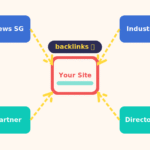
The primary mechanism of off-page SEO is link building — earning hyperlinks from other websites that point back to yours. Each quality backlink acts as a vote of confidence, telling Google: “this website is credible and worth ranking highly.” The more high-quality, relevant backlinks your site earns, the more authority it accumulates — and the higher it can rank for competitive keywords.
Why Backlinks Still Matter in 2026
Google has made hundreds of algorithm updates over the years, but backlinks have remained one of the top 3 ranking factors throughout. While Google’s AI is getting better at evaluating content quality, it still relies on the link graph — the web of connections between sites — to evaluate authority and trustworthiness.
The key distinction is quality over quantity. Today, 5 backlinks from authoritative, relevant Singapore industry websites are worth more than 500 links from generic, low-authority directories. Link building quality has become the defining difference between SEO campaigns that move rankings and those that stagnate.
What Makes a Backlink High Quality?
Domain Authority
A link from a high-authority domain — a major Singapore news site, a government agency, a university, or a well-established industry publication — carries significantly more weight than a link from a low-traffic blog. Domain authority (as measured by tools like Moz, Ahrefs, and Semrush) is a reliable proxy for how much value a link will transfer.
Relevance
A backlink from a site in your industry or a closely related niche is more valuable than a link from an unrelated domain, even if the latter has higher authority. A Singapore dental clinic getting a link from Singapore Dental Association is more valuable than a link from a cooking website, regardless of domain metrics.
Anchor Text
The anchor text — the clickable words used in the hyperlink — provides Google with context about what the linked page is about. A diversity of natural-looking anchor texts (branded, URL, partial match, generic) is healthiest. Over-optimised exact-match anchor text repeated across many links is a spam signal.
Link Placement
A link embedded naturally within the body text of a relevant article is far more valuable than a link in a footer, sidebar, or directory listing. Contextual, in-content links signal genuine editorial endorsement.
Effective Off-Page SEO and Link Building Strategies for Singapore
Digital PR and Media Outreach
Getting coverage and links from Singapore news outlets, industry publications, and respected blogs is among the most powerful link-building tactics available. This involves developing genuinely newsworthy stories — original research, expert commentary on industry trends, milestone announcements, or thought leadership — and pitching them to relevant journalists and editors. Coverage on CNA, The Business Times, Tech in Asia, or industry-specific Singapore publications carries significant authority.
Guest Posting on Relevant Industry Blogs
Contributing high-quality articles to reputable industry websites in exchange for a byline and backlink is a proven, sustainable link-building strategy. The key is targeting websites that are genuinely relevant to your industry and have real editorial standards — not “guest post farms” that accept anything for a fee.
Resource Link Building
Create genuinely useful assets — original research reports, tools, comprehensive industry guides, templates, or data visualisations — that other websites want to link to as resources.
Business Directories and Local Citations
For local Singapore businesses, high-quality directory listings (Singapore Yellow Pages, Clutch, GoodFirms, industry associations) contribute both to off-page SEO and local SEO authority. These are not the highest-value links, but they are baseline citations that your competitors almost certainly have.
Broken Link Building
Find pages on high-authority Singapore websites that link to dead or outdated pages. Reach out to the site owner, flag the broken link, and suggest your own relevant page as a replacement. This provides genuine value to the site owner while earning you a quality backlink.
Competitor Backlink Gap Analysis
Using tools like Ahrefs or Semrush, you can see every website that links to your competitors but not to you. This creates a targeted outreach list of sites already proven to link to content in your niche. Replicating your competitors’ best backlinks is one of the most efficient starting points for any link-building campaign.
Off-Page SEO Tactics to Avoid
- Buying backlinks from link farms or private blog networks (PBNs) — Google’s algorithms detect these and can penalise your domain
- Excessive reciprocal link exchanges — “I’ll link to you if you link to me” signals manipulation
- Spammy comment and forum link drops — these are ignored by Google and damage your brand
- Over-optimised anchor text across your link profile — a natural link profile has variety
- Links from irrelevant, low-quality, or foreign-language sites with no connection to your business
How to Measure Off-Page SEO Success
- Domain Rating (DR) or Domain Authority (DA): track the overall authority growth of your domain over time
- Number of referring domains: more unique sites linking to you (not just raw link count)
- Organic keyword rankings: backlinks should correlate with ranking improvements over 3–6 months
- Organic traffic: the ultimate measure — are your rankings translating to more site visits?
Contact Digital First Marketing for more information on SEO at digitalfirstmarketing.com.sg/contact-us
Related Posts


Latest News
 Website Design Singapore: Why Your Site’…June 27, 2026
 Enterprise SEO in Singapore: How Large Organi…June 26, 2026
 Off-Page SEO: The Complete Link Building Guid…June 25, 2026
Recent Posts


